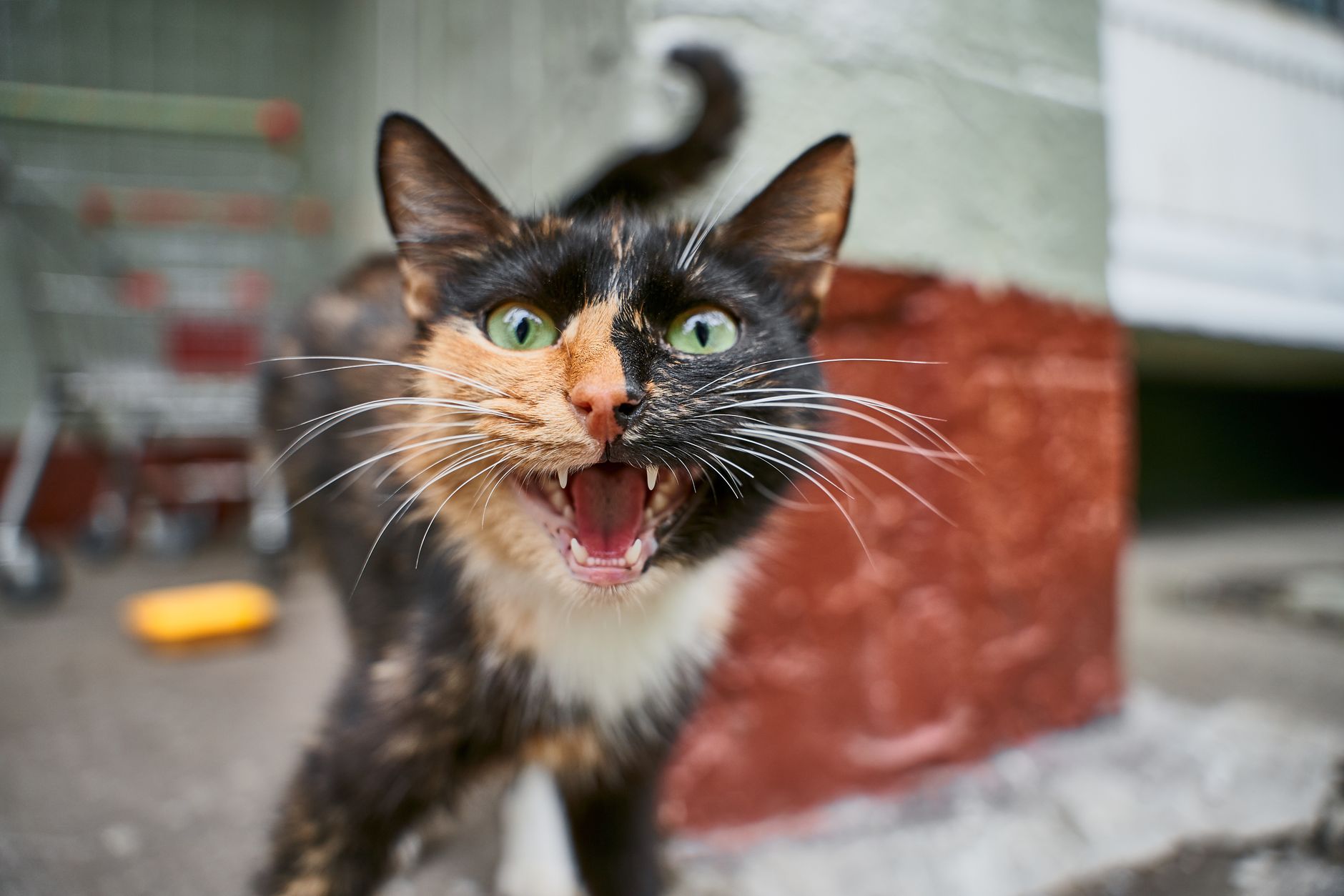
If your cat starts meowing loudly after catching a mouse, the behavior is normal, instinctive, and communicative. Cats vocalize after a successful hunt to signal excitement, seek attention, reinforce territory, or express instinct-driven emotions rooted in their evolutionary past. While it can sound alarming, the behavior usually reflects natural feline hunting behavior rather than distress.
This article explains exactly why cats meow after catching prey, what your cat is trying to communicate, when the behavior is harmless, and when you should intervene.
Understanding Natural Cat Hunting Behavior
Domestic cats (Felis catus) are obligate carnivores and instinctive predators.
Even well-fed house cats retain the same neurological hunting circuitry as wild cats.
Hunting behavior follows a predictable sequence:
-
Stalk – silent, focused observation
-
Chase – rapid pursuit
-
Capture – bite or paw immobilization
-
Kill – neck or skull bite
-
Post-hunt response – vocalization, carrying prey, or display
The meowing occurs after the hunt, not during it. Silence improves hunting success, while vocalization occurs once the prey no longer poses a threat.
The Role of Prey Drive in Domestic Cats
Prey drive is hard-wired, not learned.
It develops as early as 3–4 weeks of age and peaks in adulthood.
Cats with strong prey drive often:
-
React intensely to small moving objects
-
Vocalize after capture
-
Display prey to humans
Even indoor cats with no hunting experience may exhibit post-capture meowing because the behavior is genetically encoded, not dependent on hunger.
Why Meowing Is Part of the Hunt Outcome
Cats do not meow randomly. Meowing is a deliberate form of communication, primarily used with humans.
After catching a mouse, meowing serves three core functions:
-
Emotional release – adrenaline discharge
-
Social communication – signaling success
-
Behavioral reinforcement – completing the hunting cycle
In short, the hunt feels incomplete without a response, and meowing provides closure.
Communication: Who Is Your Cat Meowing For?
Adult cats rarely meow at other cats.
They meow at humans.
If your cat meows after catching a mouse, she is likely:
-
Calling you to witness the event
-
Seeking validation or attention
-
Engaging in learned human-directed behavior
Research shows cats modify vocal tone depending on human responsiveness, meaning your reaction shapes how often this occurs.
Is My Cat Proud After Catching a Mouse?
Cats do not feel pride the way humans do, but they experience confidence reinforcement.
After a successful hunt, the brain releases:
-
Dopamine – reward
-
Adrenaline – excitement
-
Endorphins – satisfaction
Meowing is the auditory expression of this internal reward system. The sound often appears confident, loud, or repetitive because the cat is neurologically stimulated.
Female Cats and Maternal Instincts After a Kill
Female cats are more likely to vocalize and present prey.
This behavior stems from maternal teaching instincts. In the wild, mother cats:
-
Catch prey
-
Vocalize to summon kittens
-
Demonstrate hunting skills
When your cat brings you a mouse and meows, she may be treating you like a dependent kitten, not offering a gift out of affection.
Why Cats Bring Mice to Their Owners
Cats bring prey to humans for three primary reasons:
-
Teaching behavior – showing how to hunt
-
Food sharing instinct – communal survival
-
Territorial confirmation – prey caught within owned space
Meowing often accompanies this act to draw attention to the prey.
Excitement and Adrenaline After the Catch
The post-hunt adrenaline spike causes physical arousal.
Common signs include:
-
Loud or repetitive meowing
-
Pacing
-
Tail flicking
-
Wide pupils
This is not distress. It is neurological stimulation dissipating through sound.
Stress or Anxiety-Driven Meowing After Hunting
In rare cases, meowing may indicate overstimulation or anxiety.
Warning signs include:
-
Prolonged crying lasting over 10 minutes
-
Hiding after the catch
-
Aggressive redirection
-
Panting or trembling
If these occur, the behavior may reflect stress rather than excitement.
Indoor vs Outdoor Cats: Behavioral Differences
Outdoor cats hunt frequently and vocalize less dramatically.
Indoor cats experience:
-
Less hunting exposure
-
Higher novelty response
-
Stronger emotional release
As a result, indoor cats often meow louder and longer after catching a mouse.
Why Some Cats Meow Loudly While Others Stay Silent
Vocalization varies by:
-
Personality – confident cats vocalize more
-
Breed – Siamese and Oriental breeds are more vocal
-
Learning history – cats reinforced for meowing repeat it
Silence does not mean less instinct; it reflects individual communication style.
Time of Day and Hunting Vocalization
Most mouse activity occurs at night.
Cats hunt most actively between 10 PM and 4 AM.
Nighttime meowing is amplified because:
-
Environmental noise is lower
-
Instincts peak during crepuscular hours
This explains why many owners are awakened by post-hunt vocalizations.
Is This Behavior a Sign of Dominance or Territory?
Yes, partially.
Catching prey within territory reinforces ownership.
Meowing functions as an auditory territorial marker, similar to scent marking.
The message is simple:
“This space is controlled.”
Should You Praise or Ignore Your Cat After She Catches a Mouse?
Your response determines future behavior.
-
Praise or attention → increases repetition
-
Calm acknowledgment → neutral reinforcement
-
Overreaction → escalates vocalization
Avoid punishment. It increases anxiety without reducing instinctual behavior.
When Meowing After Catching Prey Is Considered Normal
The behavior is normal if:
-
It occurs immediately after the catch
-
It lasts less than 5 minutes
-
Your cat resumes normal activity afterward
Frequency varies, but occasional vocalization is expected.
When Post-Hunt Meowing Signals a Problem
Consult a veterinarian if meowing is:
-
Sudden and excessive
-
Accompanied by lethargy
-
Combined with appetite loss
-
Followed by aggression
These may indicate pain, neurological stress, or illness.
Health Risks Associated With Catching Mice
Mice can transmit:
-
Parasites (roundworms, tapeworms)
-
Bacteria (Salmonella, Leptospira)
-
Toxins from rodenticides
Always remove prey using gloves and monitor your cat for symptoms.
How to Safely Respond When Your Cat Brings You a Mouse
-
Stay calm
-
Confine your cat to another room
-
Remove the mouse using gloves
-
Disinfect the area
Avoid chasing your cat. It triggers defensive behavior.
Can This Behavior Be Reduced or Redirected?
You cannot eliminate instinct, but you can redirect it.
Effective strategies include:
-
Daily interactive play (15–20 minutes)
-
Puzzle feeders
-
Motion-activated toys
These satisfy prey drive without real animals.
Toys That Help Satisfy Hunting Instincts
Best options include:
-
Wand toys with erratic movement
-
Battery-powered mice
-
Laser play (always end with a physical toy)
Rotate toys weekly to maintain novelty.
Does Spaying Affect Post-Hunt Meowing?
Spaying reduces hormonal behaviors but does not remove prey drive.
Spayed females may:
-
Vocalize slightly less
-
Show reduced roaming
-
Maintain hunting instincts
The behavior often persists throughout life.
Why Kittens Meow Differently After Catching Prey
Kittens vocalize more because they are:
-
Practicing communication
-
Seeking reassurance
-
Learning cause-and-effect
Adult cats refine this behavior through experience.
What Your Cat Is Really Saying
When your cat meows after catching a mouse, she is:
-
Completing the hunting cycle
-
Communicating success
-
Expressing instinctive excitement
The behavior is biologically normal, emotionally neutral, and rarely a cause for concern.
Final Thought
Your cat is not being dramatic.
She is being a cat, acting on thousands of years of finely tuned predatory instinct—using her voice to tell you the hunt is complete.