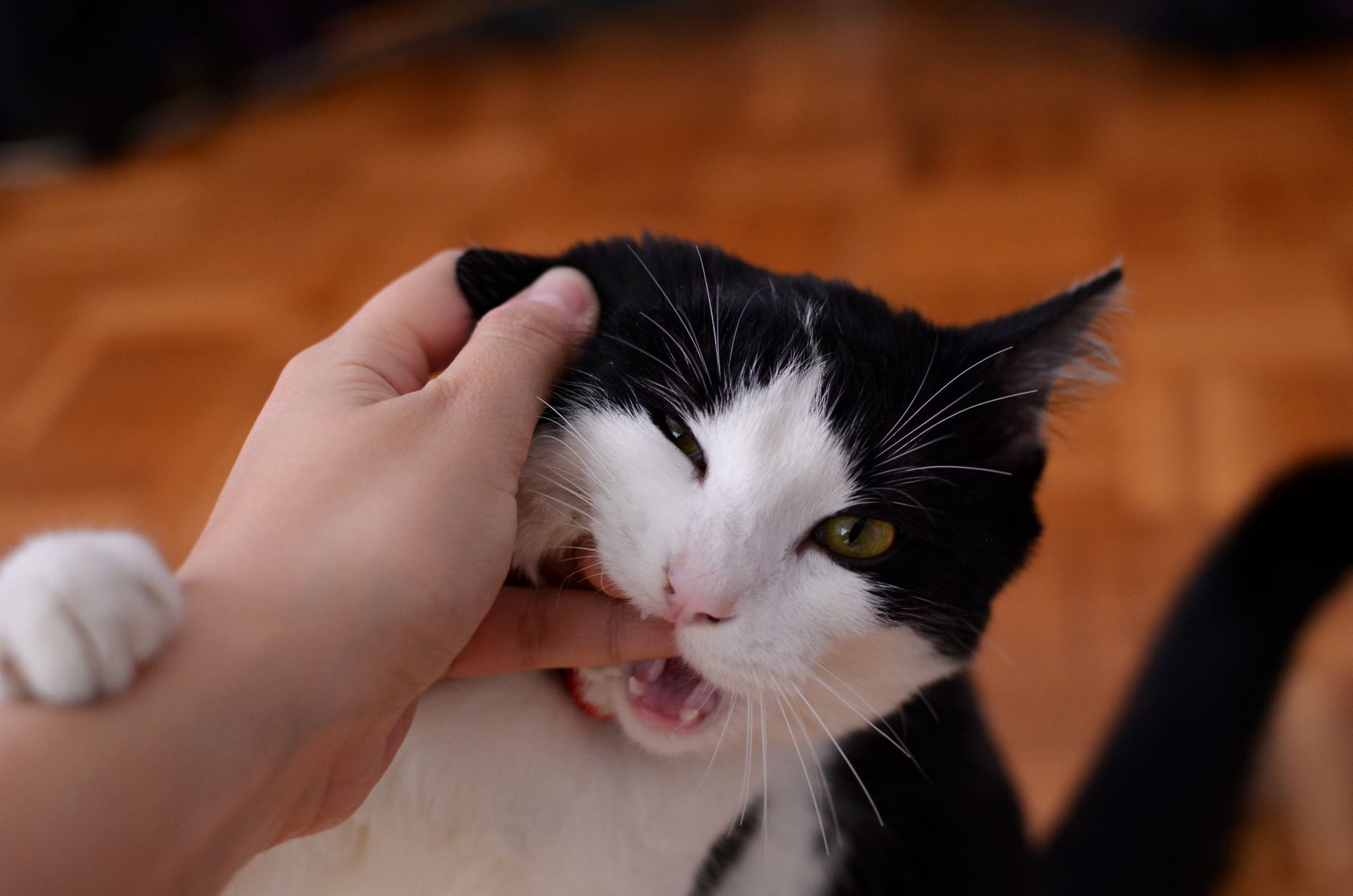
A cat bite can be surprising, especially when it happens during what seemed like a calm or affectionate moment. Many owners interpret biting as aggression, but cats use their mouths for several forms of communication. A bite may be a response to overstimulation, fear, play behavior, discomfort, or an attempt to set boundaries.
Understanding why a cat bites requires looking at the situation surrounding the behavior. The same action can have very different meanings depending on the cat’s body language, environment, and relationship with the person involved.
The Situation Before the Bite Often Explains the Reason
Cats rarely bite without a trigger. Observing what happened immediately before the bite is one of the best ways to identify the cause.
| Situation | Possible Reason for Biting | What It Means |
|---|---|---|
| During petting | Overstimulation | The cat may have reached its tolerance limit and is signaling that it wants the interaction to stop. |
| During play | Hunting instinct | The cat may treat hands or moving objects as something to chase or capture. |
| When approached suddenly | Fear or surprise | The bite may be a defensive reaction rather than intentional aggression. |
| When touched in a certain area | Pain or discomfort | The cat may be protecting a sensitive or painful part of its body. |
| Without obvious warning | Stress or behavioral issues | The cat may be reacting to changes in its environment or emotional state. |
Common Reasons Cats Bite Their Owners
1. Your Cat Has Had Enough Attention
Many cats enjoy being touched but have a lower tolerance for prolonged physical contact compared with dogs. A cat may initially enjoy petting but become uncomfortable after repeated strokes.
Before biting, cats often display subtle warning signs, such as:
- Rapid tail movement.
- Skin twitching along the back.
- Ears turning sideways or backward.
- Looking back toward your hand.
- Suddenly becoming still.
Recognizing these signals allows owners to stop the interaction before the cat feels the need to use a stronger warning.
2. The Cat Is Playing, Not Attacking
Cats are natural predators, and play behavior often imitates hunting. Kittens especially use biting as part of learning how to stalk, chase, and control movement.
Problems occur when cats learn that human hands are acceptable targets. Using fingers as toys can encourage biting because the cat associates hands with play.
Instead, interactive toys such as feather wands or moving toys help redirect hunting behavior toward appropriate objects.
3. The Cat Feels Threatened
A frightened cat may bite as a defensive response. Loud noises, unfamiliar people, sudden movements, or being restrained can trigger fear.
Defensive biting is often accompanied by other signs, including:
- Flattened ears.
- Wide eyes and enlarged pupils.
- Hissing or growling.
- A lowered or tense body posture.
- Attempting to escape.
In these situations, giving the cat space is usually more effective than trying to calm it through physical contact.
4. Your Cat May Be Experiencing Pain
A normally friendly cat that suddenly starts biting may be reacting to physical discomfort. Cats often hide signs of illness, and behavioral changes can sometimes be the first noticeable clue.
Possible medical causes can include dental problems, injuries, arthritis, skin irritation, or other sources of pain.
If biting appears suddenly or happens when a specific area is touched, a veterinary examination may help determine whether an underlying health issue is involved.
How Cat Body Language Can Prevent Bites
Cats communicate heavily through posture and movement. Learning these signals can reduce unwanted biting incidents.
- Relaxed cat: Soft eyes, loose body posture, and calm movements usually indicate comfort.
- Annoyed cat: Tail flicking, tense muscles, or ears rotating backward may indicate growing discomfort.
- Fearful cat: Crouching, hiding, or defensive sounds suggest the cat needs distance.
Respecting these signals helps build trust because the cat learns that its warnings are understood.
What Should You Do After a Cat Bites You?
A cat bite should be taken seriously because cat teeth can create deep puncture wounds that may allow bacteria to enter the skin.
- Wash the bite area thoroughly with soap and running water.
- Avoid punishing or hitting the cat, as this can increase fear and worsen future behavior.
- Observe the wound for redness, swelling, increasing pain, or discharge.
- Seek medical advice if the bite is deep, painful, or shows signs of infection.
How to Reduce Future Biting Behavior
Preventing bites usually involves changing the interaction rather than correcting the cat after the event.
- Stop petting before the cat becomes irritated.
- Avoid using hands as toys.
- Provide appropriate play outlets.
- Allow the cat to approach when it wants attention.
- Create quiet spaces where the cat can retreat.
- Use positive reinforcement for calm behavior.
When a Cat Bite Needs Professional Attention
Occasional playful or warning bites can be normal cat behavior. However, professional advice may be helpful if the biting becomes frequent, intense, or appears without an understandable trigger.
A veterinarian or qualified animal behavior professional can help identify whether the cause is medical, environmental, or behavioral.
Understanding the Message Behind the Bite
A cat bite is usually a form of communication rather than a random act of aggression. The cat may be saying that it is uncomfortable, frightened, excited, or simply engaging in natural play behavior.
By paying attention to context and body language, owners can better understand their cat’s needs and create interactions that are safer and more comfortable for both sides.