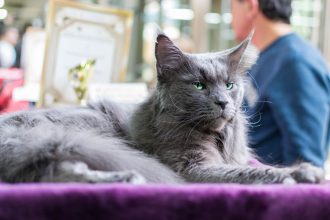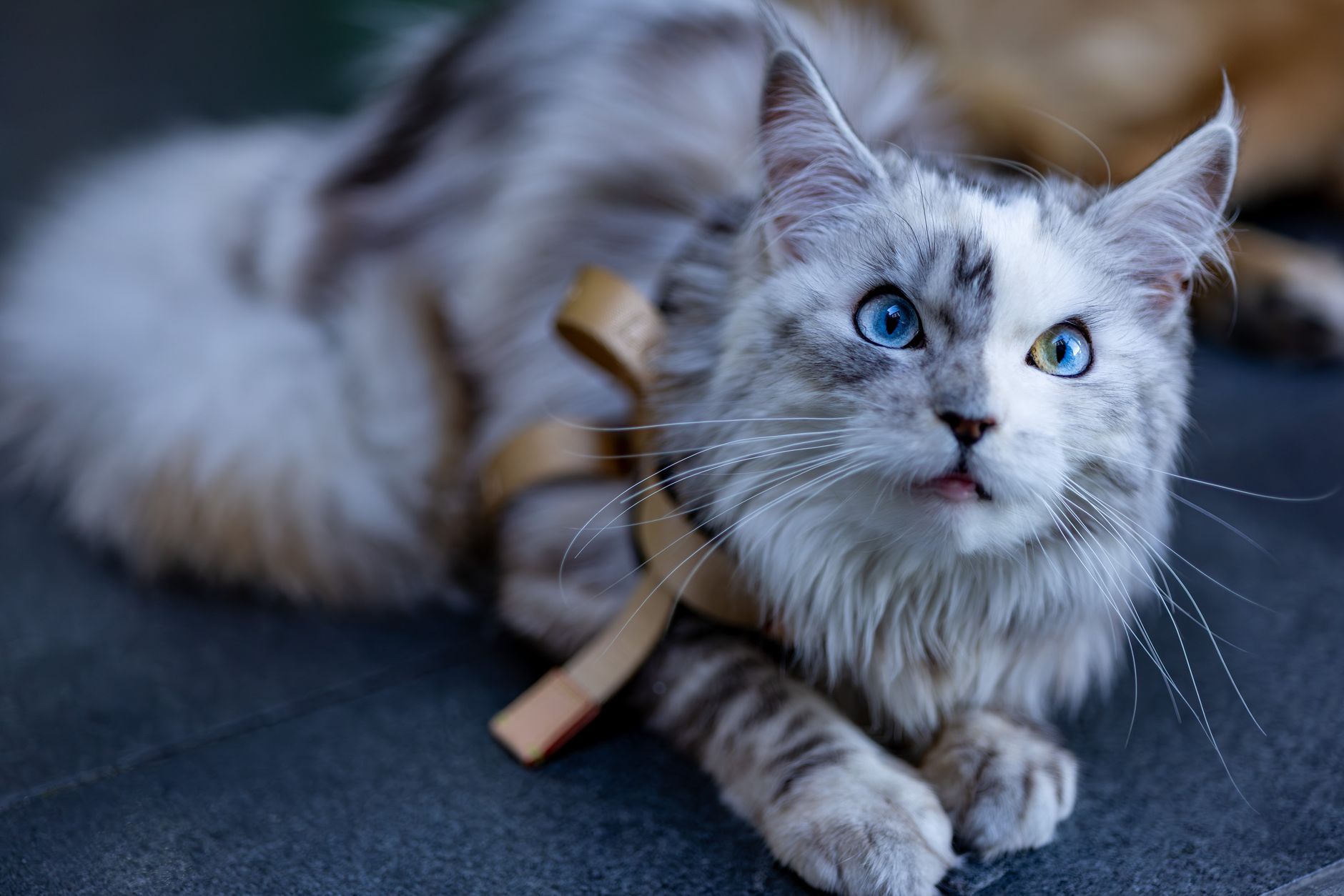
Maine Coon cats are famous for their impressive size, but their popularity is not based on size alone. This breed combines a large physical frame with a long history as a hardy working cat, making it one of the most recognisable domestic cats in the world.
For anyone considering bringing a Maine Coon home, understanding their expected adult size is important. Their growth pattern, feeding needs, furniture requirements and general care are different from those of a typical house cat.
So, how big can a Maine Coon actually get? The answer depends on genetics, health, nutrition and individual development, but the breed is consistently among the largest domestic cats.
Typical Maine Coon size: larger than most domestic cats
A fully grown Maine Coon is significantly bigger than the average pet cat. While many domestic cats weigh between 3 and 5 kilograms, Maine Coons commonly develop much heavier and longer bodies.
Typical adult measurements include:
- Male Maine Coons: often around 6 to 8 kilograms, with some individuals becoming considerably heavier.
- Female Maine Coons: usually smaller, commonly around 4 to 6 kilograms.
- Body length: many adults can approach 1 metre when measured from nose to tail.
- Build: large bone structure, broad chest and muscular body.
The breed’s size is not simply caused by extra weight. Maine Coons are naturally large-framed cats with long bodies, heavy bones and thick coats that create their distinctive appearance.
Why Maine Coons grow bigger than ordinary cats
The Maine Coon’s unusual size is connected to its development as a breed adapted to cold environments.
Originating in the northeastern United States, Maine Coons developed physical traits that helped them survive harsh weather conditions. Their bodies were shaped for strength, warmth and outdoor activity.
- Thick fur: A dense coat provides insulation against cold temperatures.
- Large paws: Broad feet help with movement across snow and uneven surfaces.
- Long tail: The large, furry tail provides balance and can help conserve body heat.
- Strong body structure: A larger frame supports endurance and physical activity.
These characteristics became part of the breed standard over generations, creating the large and sturdy Maine Coon known today.
Maine Coons do not reach full size quickly
One of the biggest differences between Maine Coons and many other domestic cats is their growth timeline.
Most cats reach their adult size relatively early, often within their first year. Maine Coons mature more slowly and can continue developing for several years before reaching their final size.
This gradual growth means owners may not see the full size of their cat during the kitten stage. A young Maine Coon may appear similar to other kittens before later developing the breed’s characteristic large frame.
The slower growth process also means owners should provide appropriate nutrition throughout development rather than attempting to accelerate growth through excessive feeding.
The largest Maine Coons can become exceptionally big
Some Maine Coons grow far beyond the usual range and have gained attention for their remarkable size. Individual cats have been recorded weighing more than 10 kilograms and reaching extraordinary lengths.
However, these extreme examples are exceptions rather than the normal expectation for the breed.
A larger Maine Coon is not automatically healthier. Maintaining an appropriate body condition is more important than achieving maximum size. Excess weight can place unnecessary stress on joints and reduce a cat’s quality of life.
What determines a Maine Coon’s final size?
Genetics has the biggest influence
A Maine Coon’s adult size is largely determined by inherited traits. Cats from larger bloodlines are more likely to develop bigger bodies, while others may remain within a more moderate size range.
Even within the same breed, individual cats can vary significantly. Two Maine Coons of the same age may have noticeably different body sizes because of their genetic background.
Nutrition supports healthy growth
Food plays an important role in helping Maine Coons develop properly, especially during their extended growth period.
A balanced diet supports muscle development, bone health and overall condition. However, feeding more than necessary will not create a naturally larger cat. It usually increases body fat rather than improving healthy growth.
Activity and health affect body condition
Because Maine Coons are large cats, maintaining movement and muscle strength is important. Regular activity helps them stay mobile and supports a healthy weight.
Veterinary care is also important because larger cats may experience greater physical demands on their joints and body structure.
Male and female Maine Coons: how size differs
| Feature | Male Maine Coon | Female Maine Coon |
|---|---|---|
| Average size | Usually larger and heavier | Generally smaller but still large compared with most cats |
| Body shape | Often broader with more muscle mass | Usually lighter framed |
| Growth period | Can continue developing for several years | Also matures more slowly than many breeds |
Male Maine Coons usually attract more attention because their size can become especially impressive, but female Maine Coons are still considered large cats compared with the average domestic breed.
Living with a large Maine Coon requires preparation
The size of a Maine Coon affects more than appearance. Owners should consider the practical changes required for a larger cat.
- Larger litter boxes: Standard-sized boxes may feel restrictive for a long-bodied cat.
- Strong furniture: Cat trees, beds and climbing structures need to support more weight.
- Regular grooming: Their long coat requires maintenance to prevent tangles and mats.
- Appropriate diet: Portion control is important because large cats can easily gain excess weight.
Despite their size, Maine Coons are often chosen as companion animals because many owners appreciate their social and adaptable personalities.
Is the biggest Maine Coon always the best?
The impressive size of the Maine Coon is part of its appeal, but responsible ownership is about more than producing the largest possible cat.
A healthy Maine Coon should have a balanced body shape, good mobility and a comfortable lifestyle. An unusually heavy cat may face unnecessary health challenges if its size comes from excess weight rather than natural structure.
Responsible breeding focuses on maintaining the breed’s characteristics while protecting health and temperament.
The real reason Maine Coons stand out
Maine Coons are among the largest domestic cats, but their popularity comes from a combination of traits. Their size, appearance, history and personality all contribute to their reputation as a unique breed.
A Maine Coon can grow into an impressive animal, but the most important measure is not how many kilograms it reaches. A healthy, active and well-cared-for Maine Coon represents what makes this breed special.