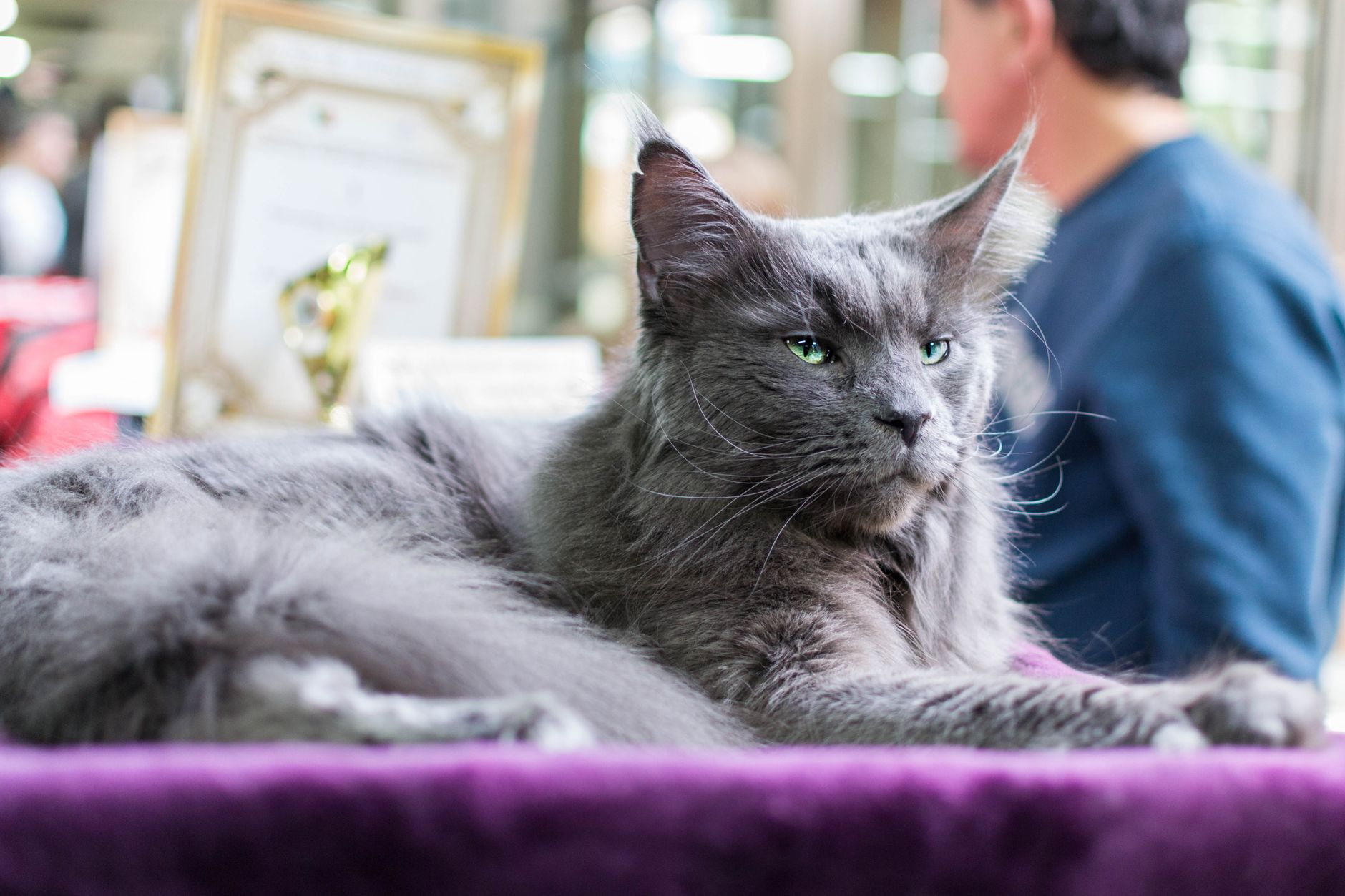
Maine Coon cats are often described as giant domestic cats, and for good reason. Their long bodies, thick coats, large paws and impressive tails make them look much bigger than the average house cat. However, their size is not just the result of appearance. Maine Coons are naturally built as large, sturdy cats with physical traits shaped by their history in a colder environment.
For people considering adopting a Maine Coon, one of the most common questions is simple: how big can a Maine Coon cat actually get?
The answer depends on several factors, including genetics, nutrition, health and sex. While some Maine Coons reach exceptional sizes, most are large but still within a predictable range for the breed.
Maine Coon size compared with an average house cat
The Maine Coon is one of the largest recognised domestic cat breeds. A typical domestic cat usually weighs between 3.5 and 5.5 kilograms, while a healthy adult Maine Coon can be considerably heavier.
Adult Maine Coons commonly reach:
- Male Maine Coons: around 6 to 8 kilograms on average, with some larger individuals exceeding this range.
- Female Maine Coons: generally smaller, often around 4 to 6 kilograms.
- Length: many Maine Coons can measure close to 1 metre from nose to tail tip.
The breed’s impressive size comes from a combination of factors rather than a single feature. Their long torso, muscular build, dense fur and large bone structure all contribute to their distinctive appearance.
The largest Maine Coons can reach extraordinary sizes
Some Maine Coons grow far beyond the typical range. Individual cats have been recorded at more than 10 kilograms, and exceptionally large examples have reached even higher weights.
However, extreme size should not be considered the standard. A very heavy cat is not automatically healthier, and weight alone does not tell the full story. A Maine Coon’s body condition, muscle development and overall health are more important than achieving a specific number on a scale.
Owners should be careful not to overfeed Maine Coons in an attempt to make them larger. Excess body fat can create health problems, including stress on joints and reduced mobility.
Why do Maine Coon cats grow so large?
The Maine Coon’s size is linked to its natural development as a hardy working cat.
The breed originated in the northeastern United States, particularly the state of Maine, where cats had to survive cold winters and challenging outdoor conditions. Their physical characteristics helped them adapt to that environment.
- Large body frame: A bigger structure helps support strength and endurance.
- Long, thick coat: Dense fur provides insulation in cold weather.
- Large paws: Broad paws help movement through snow and rough terrain.
- Long tail: The thick tail helps with balance and provides additional warmth when curled around the body.
Over generations, these traits became strongly associated with the breed and contributed to the Maine Coon’s reputation as a giant domestic cat.
Maine Coons take longer to reach full size
One reason Maine Coons surprise many owners is their slower growth rate compared with smaller cat breeds.
Many domestic cats reach their adult size within their first year. Maine Coons, however, can continue developing for several years before reaching their full physical maturity.
This extended growth period means a young Maine Coon may appear ordinary at first before gradually developing the larger body, heavier bones and fuller coat that define the breed.
Owners should therefore consider long-term growth when preparing for a Maine Coon. A kitten that seems average in size may eventually require larger beds, stronger scratching posts and more spacious equipment.
Factors that determine a Maine Coon’s final size
Genetics
Genetics is the biggest influence on how large a Maine Coon becomes. Cats from larger bloodlines are more likely to develop bigger frames, while smaller parents may produce more moderate-sized offspring.
Diet and nutrition
Proper nutrition supports healthy development, especially during the long growth period of Maine Coons. A balanced diet helps maintain muscle, bone development and overall condition.
More food does not necessarily create a bigger or healthier cat. Overfeeding can increase body fat without improving the natural size of the animal.
Health and activity levels
A Maine Coon that maintains healthy movement and receives appropriate veterinary care is more likely to develop normally. Regular activity is especially important because larger cats place more stress on their joints and body structure.
Male versus female Maine Coon size differences
| Characteristic | Male Maine Coon | Female Maine Coon |
|---|---|---|
| Typical size | Larger and heavier | Smaller but still large compared with many breeds |
| Body structure | Usually broader and more muscular | Generally lighter framed |
| Growth pattern | May continue developing for several years | Also has a slow maturation process |
Both sexes can become impressive cats. The difference is usually noticeable because male Maine Coons tend to have larger frames and heavier builds.
Are Maine Coons difficult to care for because of their size?
Their size does create some additional considerations, but Maine Coons are not simply larger versions of ordinary cats.
Owners should consider:
- Larger supplies: Maine Coons often need bigger litter boxes, carriers and sleeping areas.
- Coat maintenance: Their long fur requires regular brushing to reduce tangles and mats.
- Nutrition management: Large cats need appropriate food portions to maintain a healthy weight.
- Space: They benefit from climbing areas and furniture strong enough to support their size.
Despite their size, Maine Coons are often valued for their social personalities. Their reputation as friendly and adaptable cats has helped make them one of the world’s most popular breeds.
Does a bigger Maine Coon mean a better Maine Coon?
Size is one of the breed’s most recognisable characteristics, but it should not be the only measure of quality.
A healthy Maine Coon with a balanced body condition, good mobility and a comfortable temperament is more desirable than an unusually large cat with weight-related health issues.
Responsible breeders focus on maintaining healthy genetics and breed characteristics rather than producing the largest possible animals.
The real appeal of the Maine Coon
Maine Coons are famous because they combine impressive physical size with the personality traits many owners want in a companion animal. Their large appearance attracts attention, but their intelligence, social nature and adaptability are equally important parts of their appeal.
A Maine Coon can become one of the largest domestic cats, but its value is not measured only by kilograms or length. The breed’s unique combination of history, appearance and temperament is what makes it stand out among domestic cats.