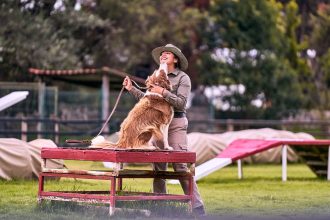
A barking dog can be frustrating, especially when the behavior happens repeatedly or at inappropriate times. However, there is no reliable method that instantly eliminates all barking because dogs bark for different reasons. The fastest way to reduce unwanted barking is to understand the trigger, interrupt the behavior calmly, and teach the dog what response is expected instead.
Quick solutions can help manage a barking moment, but lasting improvement comes from consistent training. A dog that learns how to respond calmly will be easier to manage than a dog that is only temporarily silenced.
What to Do When Your Dog Starts Barking
When barking begins, the first step is to avoid reacting emotionally. Shouting, running toward the dog, or giving immediate attention can sometimes make the behavior stronger because the dog may interpret the response as engagement.
Instead, use a calm interruption and redirect the dog’s attention.
- Stay calm and avoid matching the dog’s excitement level.
- Identify what caused the barking.
- Use a consistent cue such as “quiet” or another chosen command.
- Reward the dog once it becomes calm.
The important part is rewarding silence rather than rewarding the barking itself.
Why Dogs Bark in the First Place
Barking is a communication tool. A dog may bark because it wants attention, feels threatened, becomes excited, is bored, or is responding to something in its environment.
| Cause of Barking | Typical Example | Useful Approach |
|---|---|---|
| Alert barking | Seeing strangers, animals, or movement outside | Teach the dog to notice the trigger and then relax |
| Attention seeking | Barking when ignored | Give attention when the dog is quiet |
| Boredom | Barking during long periods without activity | Add exercise and mental stimulation |
| Anxiety | Barking when alone or during stressful events | Address the underlying stress gradually |
Teaching the “Quiet” Command
A quiet command is not learned by repeatedly shouting the word at a barking dog. The dog needs to associate the command with a calm response.
A simple training process involves waiting for a brief pause in barking, marking that moment, and providing a reward. With repetition, the dog begins to understand that silence produces positive results.
Remove Common Triggers Before They Become a Habit
Prevention can make training much easier. If a dog repeatedly practices barking at the same trigger, the behavior can become more established.
- Block access to windows if outside activity causes frequent barking.
- Create distance from stressful sounds or situations.
- Provide a comfortable area where the dog can rest undisturbed.
- Use background noise to reduce reactions to sudden sounds.
Exercise Can Reduce Unnecessary Barking
Dogs with insufficient physical activity or mental stimulation may bark more frequently because they have excess energy or limited ways to engage their natural behaviors.
Regular walks, play, training exercises, and enrichment activities can improve overall behavior. The appropriate amount of activity depends on the dog’s breed, age, health, and personality.
Methods That Often Fail to Stop Barking
Some quick reactions may appear effective but can create new problems or fail to address the reason behind the barking.
- Constant yelling: may increase excitement or make the dog think the owner is participating.
- Punishment without understanding the cause: may increase fear or stress.
- Giving rewards after barking: teaches the dog that barking gets results.
When Barking Requires More Than Basic Training
Some barking problems are connected to deeper issues such as separation anxiety, fear, or medical discomfort. If barking appears suddenly, becomes extreme, or is accompanied by destructive behavior or unusual changes, professional guidance may be needed.
A veterinarian or qualified dog behavior professional can help identify whether the problem is related to health, environment, or learned behavior.
Fast Results Come From Clear Communication
Stopping a dog from barking “in seconds” usually means interrupting a single barking episode, not permanently changing the behavior. Long-term improvement requires teaching the dog what to do instead.
The most effective approach combines calm responses, consistent commands, appropriate rewards, and an environment that supports relaxation. With repetition, dogs can learn that quiet behavior is often the better choice.