Finding claw marks, loose fibers, or damaged edges on a favorite rug can be frustrating for cat owners. However, scratching is not a sign that a cat is misbehaving. It is a normal feline behavior used for stretching, claw maintenance, communication, and stress relief.
The goal is not to completely stop scratching. A better approach is to redirect that behavior away from rugs by providing more suitable alternatives and making rugs less attractive targets.
Why Cats Scratch Rugs in the First Place
Before trying to prevent rug damage, it helps to understand why cats choose certain surfaces. Rugs often provide several features cats naturally prefer: texture, resistance, and a stable surface for pulling with their claws.
| Reason Cats Scratch | What the Behavior Does |
|---|---|
| Claw maintenance | Helps remove old outer claw layers and keeps claws healthy. |
| Stretching | Allows cats to exercise their muscles and body after resting. |
| Scent marking | Paw pads contain scent glands that help cats communicate. |
| Stress relief | Scratching can be a way for cats to release energy or tension. |
Because scratching serves several purposes, simply removing access to rugs without offering alternatives often leads to frustration for both cats and owners.
Provide Better Scratching Options
The most effective way to protect rugs is to give cats something more appealing to scratch. A scratching post or pad should match the way your cat naturally scratches.
Choose the Right Scratching Surface
Cats have individual preferences. Some prefer vertical scratching posts, while others like horizontal surfaces similar to rugs.
- Vertical posts: Good for cats that stretch upward while scratching.
- Horizontal scratchers: Useful for cats that prefer floor-level scratching.
- Cardboard scratchers: Often attractive because of their texture.
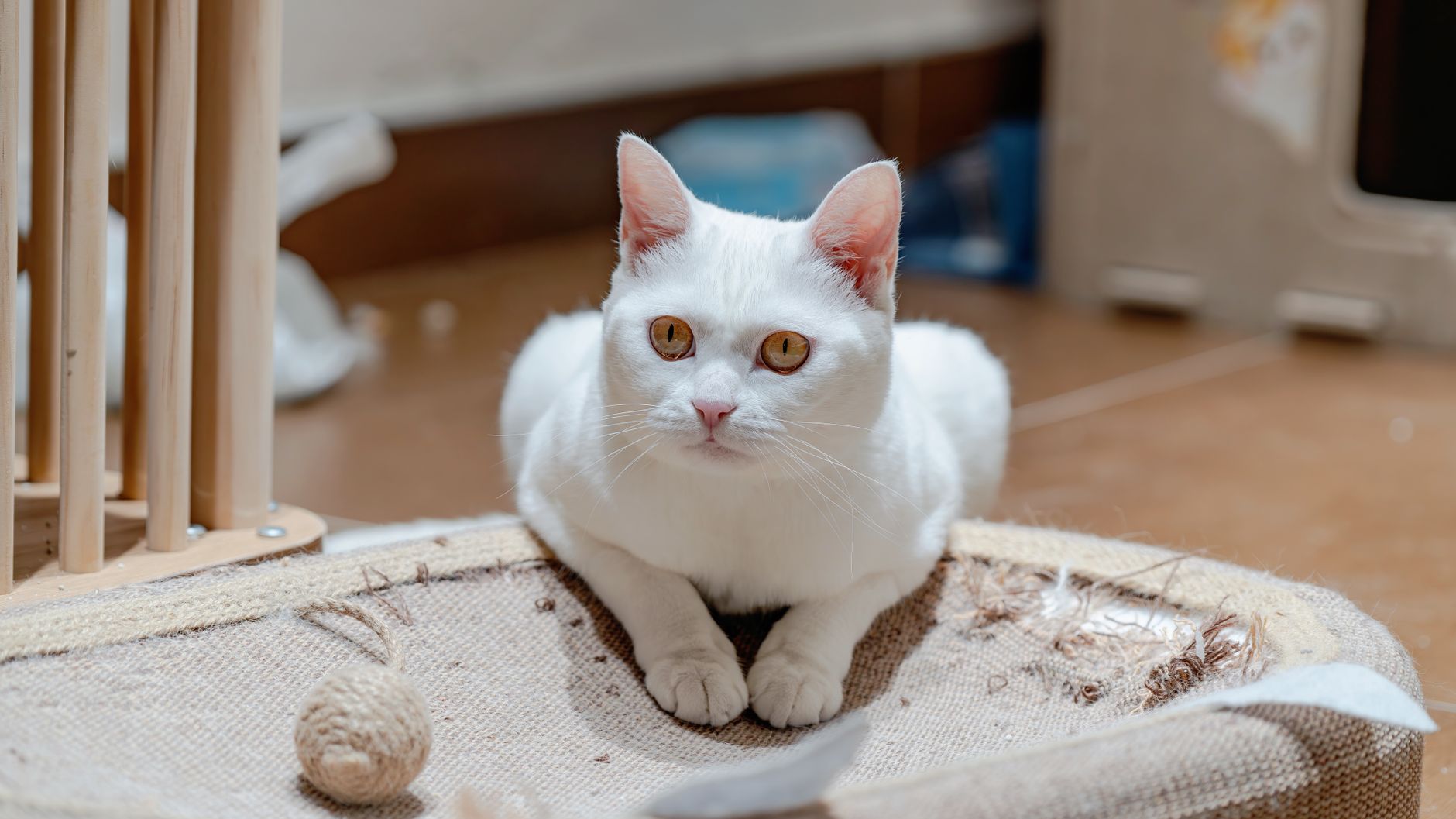
- Sisal surfaces: Durable and commonly used in scratching products.
If a cat repeatedly chooses a rug, placing a scratcher nearby can help redirect the habit more successfully.
Make Scratching Posts More Appealing Than Rugs
Simply buying a scratching post does not guarantee a cat will use it. Placement and encouragement matter.
Try:
- Placing scratchers near the damaged rug area.
- Putting scratching posts near sleeping areas because cats often scratch after waking.
- Rewarding your cat when they use the correct surface.
- Using catnip or toys to make the scratching area more interesting when appropriate.
The goal is to make the acceptable scratching location more rewarding than the rug.
Protect Rugs While Your Cat Learns
Training takes time, so protecting the rug during the transition period can prevent continued damage.
Use Physical Barriers
Temporary barriers can make rugs less accessible in areas where scratching happens frequently.
- Cover favorite scratching spots with furniture.
- Use protective mats or covers over vulnerable areas.
- Move rugs temporarily while redirecting behavior.
Change the Rug’s Appeal
Cats often return to surfaces that provide the right resistance under their claws. Making the rug less satisfying to scratch can encourage them to choose another option.
Some owners use protective coverings or textures cats dislike, but any method should be safe and comfortable for the animal.
Keep Your Cat’s Claws Maintained
Regular claw care can reduce the amount of damage caused by scratching, although it will not eliminate the behavior itself.
- Trim claws carefully when needed.
- Check claws regularly for overgrowth.
- Ask a veterinarian or professional groomer for guidance if your cat resists handling.
Healthy claws are part of normal feline behavior, so maintenance should support natural needs rather than prevent scratching entirely.
Avoid Punishment-Based Methods
Punishing a cat for scratching rugs usually does not solve the underlying issue. Cats may not understand why they are being punished, and punishment can increase stress or damage trust between the cat and owner.
More effective strategies focus on:
- Providing acceptable scratching choices.
- Rewarding desired behavior.
- Reducing access to problem areas.
- Understanding the reason behind the scratching.
Choose Cat-Friendly Rugs When Replacing Damaged Ones
If a rug needs to be replaced, selecting a more practical material can reduce future problems.
| Rug Feature | Why It May Help Cat Owners |
|---|---|
| Low pile | Less tempting for clawing and easier to clean. |
| Tightly woven fibers | Less likely to unravel when scratched. |
| Durable materials | Better able to handle daily pet activity. |
| Easy-clean surfaces | More practical for homes with pets. |
Recognize When Scratching Behavior Changes
A sudden increase in scratching may sometimes indicate changes in a cat’s environment or emotional state. Moving homes, introducing another pet, changes in routine, or stress can influence scratching habits.
If scratching becomes excessive or is accompanied by other behavior changes, it may be worth discussing with a veterinarian or animal behavior specialist.
The Best Solution Is Redirection, Not Elimination
Cats scratch because they are cats. Trying to completely remove this behavior usually creates a conflict with their natural instincts.
The most successful approach is to protect rugs while giving cats appropriate ways to scratch, stretch, and mark their territory. With the right scratching options, consistent encouragement, and practical rug protection, cats and carpets can comfortably share the same home.