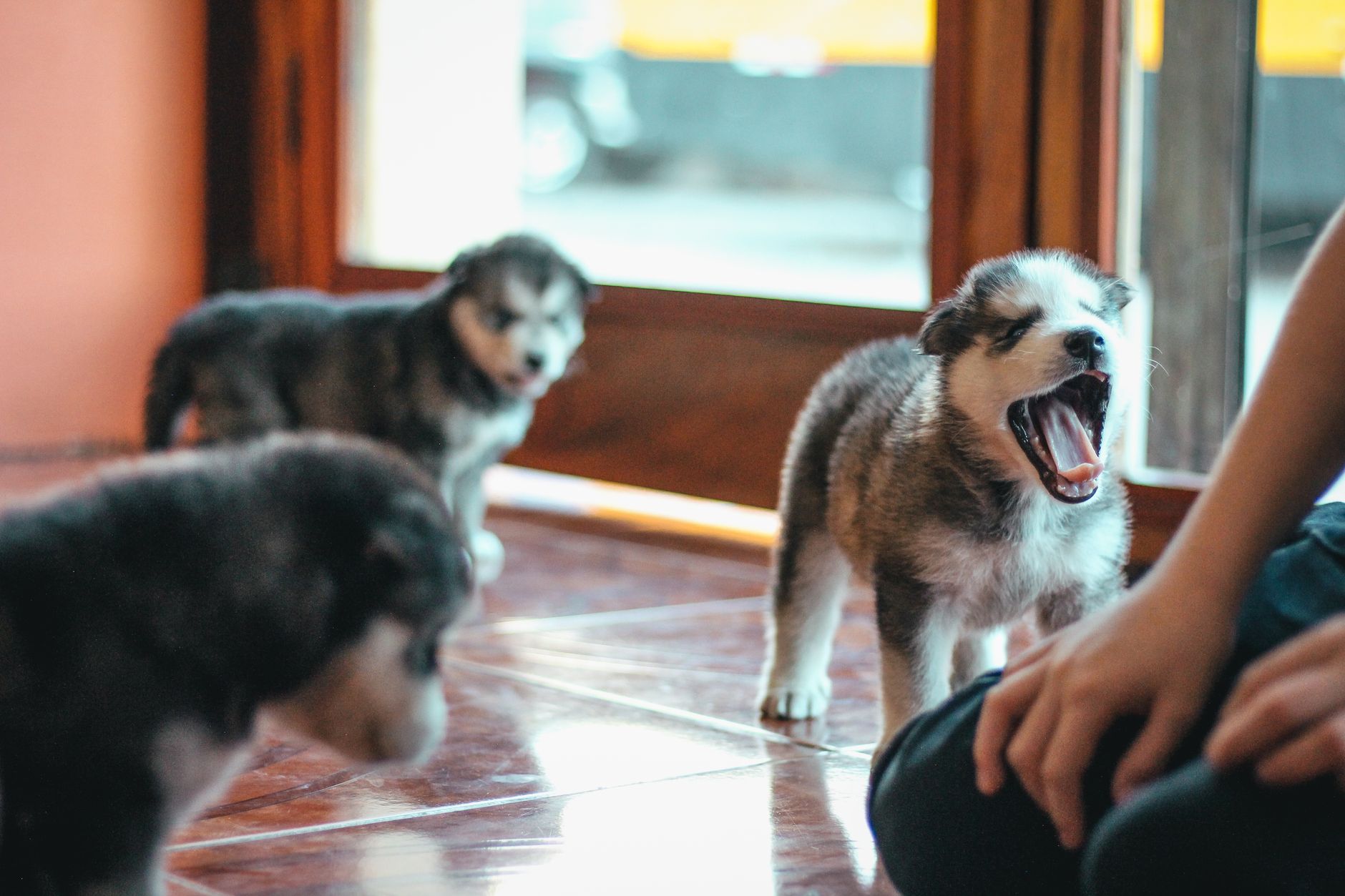
Barking is a normal way for puppies to communicate. Young dogs bark when they are excited, asking for attention, responding to sounds, feeling uncertain, or trying to interact with their environment. The goal of training is not to eliminate barking completely, but to help a puppy learn when barking is appropriate and when it should stop.
Reducing excessive puppy barking requires consistency, patience, and an understanding of why the behavior happens. Punishing a puppy without identifying the cause often fails because the dog does not learn what behavior is expected instead.
First Identify Why Your Puppy Is Barking
Before changing a puppy’s behavior, owners need to understand the reason behind the barking. Different causes require different training approaches.
| Reason for Barking | Common Situation | Training Focus |
|---|---|---|
| Attention seeking | Puppy barks when wanting play, food, or interaction | Reward calm behavior instead of responding to barking |
| Excitement | Barking during greetings, play, or new experiences | Teach self-control and calm responses |
| Fear or anxiety | Barking at strangers, noises, or unfamiliar situations | Build confidence through gradual exposure |
| Boredom | Barking when left alone or lacking activity | Provide exercise, enrichment, and mental stimulation |
Reward Quiet Behavior Instead of Only Correcting Barking
One of the most effective ways to train a puppy is through positive reinforcement. Puppies repeat behaviors that receive rewards, so owners should actively reinforce moments of calmness.
For example, if a puppy stops barking and remains quiet for a few seconds, offering praise or a small reward helps the puppy understand that silence produces positive results.
Constantly giving attention while a puppy is barking can accidentally teach the opposite lesson. Even scolding can become a form of attention, which may encourage some puppies to continue.
Teach a Reliable “Quiet” Command
A quiet command can help a puppy learn to stop barking on cue, but it works best when introduced gradually.
- Allow the puppy to bark naturally for a moment.
- Wait for a brief pause in barking.
- Use a consistent word such as “quiet.”
- Reward the puppy immediately when it remains silent.
- Repeat the process regularly in short training sessions.
The puppy should learn that being calm leads to rewards. The command becomes more effective when it is associated with a clear behavior rather than used only as a reaction after barking becomes intense.
Provide Enough Physical and Mental Activity
Many puppies bark because they have excess energy or lack stimulation. Young dogs are still developing their ability to manage excitement, so regular activities are important.
Helpful ways to reduce boredom-related barking include:
- Age-appropriate walks and play sessions.
- Training exercises that challenge the puppy mentally.
- Interactive toys and puzzle feeders.
- Opportunities to safely explore new environments.
A tired puppy is not automatically a quiet puppy, but meeting exercise and enrichment needs can reduce behaviors caused by frustration or boredom.
Avoid Common Training Mistakes
Some responses may unintentionally make barking worse. Understanding these mistakes helps owners create clearer communication.
- Shouting at the puppy: The puppy may interpret loud reactions as joining the excitement.
- Rewarding barking accidentally: Giving treats, toys, or attention during barking can reinforce the behavior.
- Inconsistent rules: Allowing barking sometimes but correcting it at other times can confuse the puppy.
- Using punishment as the main strategy: Fear-based approaches may increase anxiety and do not teach an alternative behavior.
Help Puppies Become Comfortable With Their Environment
Some puppies bark because they are unsure about people, animals, sounds, or new situations. Early socialization can help them develop confidence.
Controlled exposure to different experiences allows puppies to learn that unfamiliar situations are not always threats. The process should be gradual and positive rather than forcing the puppy into overwhelming situations.
Managing Barking When a Puppy Is Left Alone
Some puppies bark when separated from their owners. This may happen because they have not learned how to relax independently.
Owners can encourage independence by:
- Practicing short periods of separation and gradually increasing time.
- Creating a comfortable resting area.
- Providing safe activities during alone time.
- Avoiding dramatic departures and arrivals.
Persistent barking when alone may be connected to separation anxiety, which requires a more structured approach and, in some cases, professional guidance.
Consistency Is the Key to Long-Term Improvement
Puppies do not learn behavior changes instantly. Progress depends on repeated practice and clear communication from everyone in the household.
The most effective approach combines understanding the reason behind barking, rewarding appropriate behavior, providing enough stimulation, and maintaining consistent training routines. With time, puppies can learn to communicate without excessive noise.