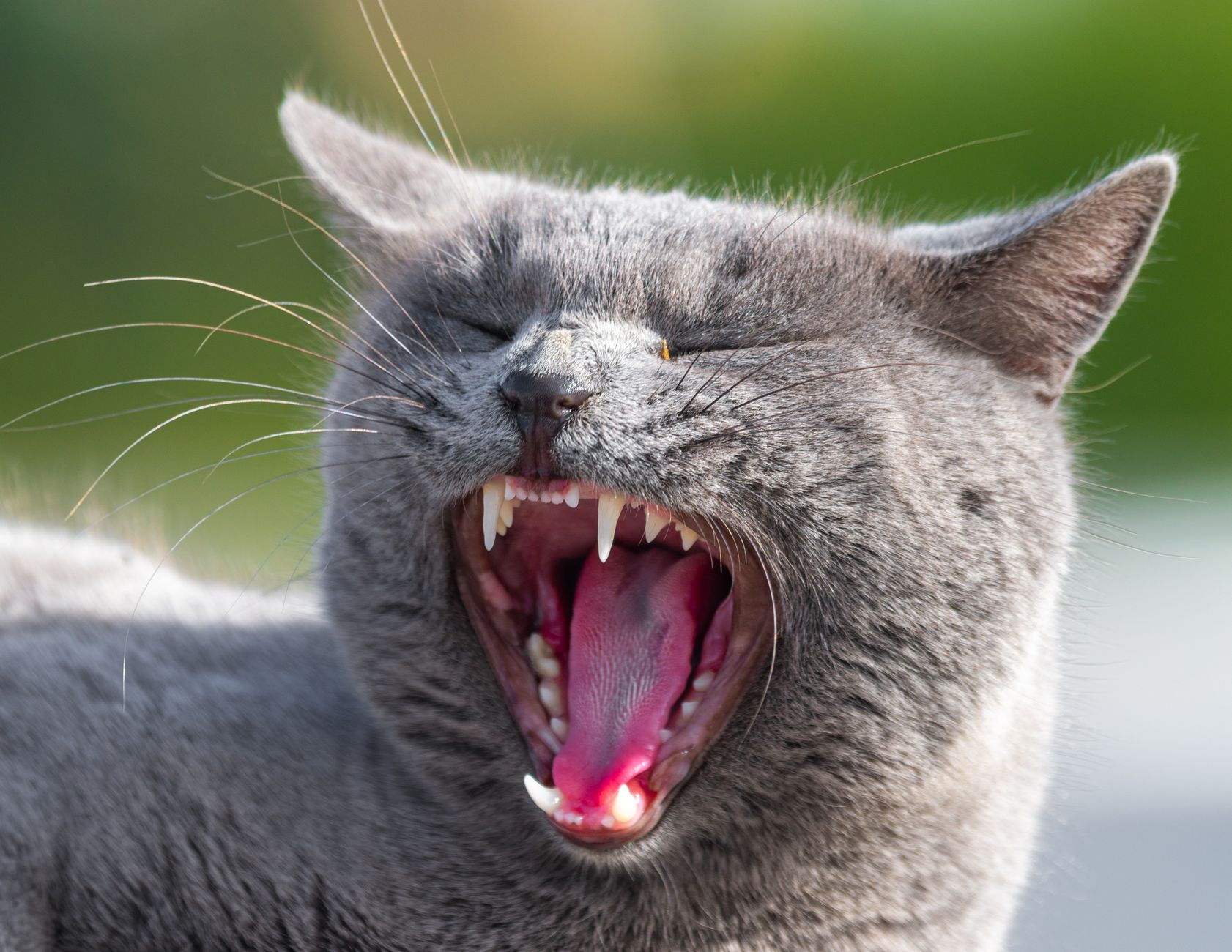
If you’ve ever watched your cat yawn—really yawn—you may have caught yourself thinking:
“That looks like more than one jaw… right?”
From a pawrent’s point of view, cats can seem to open their mouths impossibly wide, snap shut with lightning speed, and move their mouths in ways that feel almost too flexible. That leads to a surprisingly common question:
How many jaws does a cat actually have?
The clear, correct answer is simple:
A cat has one jaw, made up of two main parts—the upper jaw and the lower jaw.
No extra jaws. No hidden set. Just one highly specialized, extremely efficient jaw system.
But the way that jaw works is what makes it feel so impressive—and sometimes confusing.
The Short Pawrent Answer (Up Front)
A cat has:
-
One jaw
-
Composed of:
-
Upper jaw (maxilla) – fixed
-
Lower jaw (mandible) – movable
-
The lower jaw moves at the temporomandibular joint (TMJ), allowing your cat to open and close their mouth.
That’s it—one jaw, two parts.
Why It Looks Like Cats Have “More Than One” Jaw
From everyday life, cats:
-
Open their mouths very wide
-
Move their jaws quickly and precisely
-
Bite with extreme control
This can look like multiple jaws, especially when:
-
They yawn
-
Chatter at birds
-
Grab toys
-
Carry prey or objects
In reality, cats simply have a very flexible and powerful jaw joint, not extra jaws.
Understanding the Cat Jaw Structure (Simple Anatomy)
A cat’s jaw consists of:
Upper Jaw (Maxilla)
-
Fixed in place
-
Attached to the skull
-
Holds the upper teeth
Lower Jaw (Mandible)
-
Moves up and down
-
Houses the lower teeth
-
Connected to the skull at the TMJ
Together, these form one functional jaw system.
The Temporomandibular Joint (TMJ): The Secret Behind the Flexibility
The temporomandibular joint is the hinge that allows your cat to:
-
Open their mouth wide
-
Snap it shut quickly
-
Apply strong bite pressure
Cats have a hinge-style TMJ, meaning:
-
Motion is mostly up and down
-
Very little side-to-side movement
This design is ideal for:
-
Catching prey
-
Delivering precise bites
-
Holding objects firmly
Why Cat Jaws Are Different From Human Jaws
As a pawrent, you might notice your cat doesn’t “chew” the way humans do.
That’s because:
-
Humans have grinding jaws (side-to-side motion)
-
Cats have cutting and tearing jaws
Cats evolved as obligate carnivores, so their jaw is built for:
-
Shearing meat
-
Crushing with canines
-
Swallowing chunks
Not for grinding food.
How Many Jawbones Does a Cat Have?
This is where confusion often starts.
A cat has:
-
Two mandibles (left and right halves) that fuse together
-
One upper jaw structure integrated into the skull
Even though there are two lower jaw bones, they function as one jaw.
So biologically:
-
Two bones
-
One jaw
Why Cats Can Open Their Mouths So Wide
Many pawrents are shocked by how wide their cat can yawn.
That’s because:
-
Cats have a wide gape angle
-
Their jaw joint allows large vertical opening
-
Facial muscles are extremely flexible
This wide opening helps with:
-
Delivering a killing bite in prey
-
Carrying objects
-
Vocalizing loudly
It does not mean they have extra jaws.
Do Cats Have Strong Jaws?
Yes—especially for their size.
Cats have:
-
High bite force relative to body size
-
Extremely sharp teeth
-
Strong jaw-closing muscles
This allows them to:
-
Puncture prey
-
Hold struggling animals
-
Tear flesh efficiently
From a pawrent’s POV, this is why even a playful bite can feel intense.
Why Cats Don’t Chew Much
You may notice your cat:
-
Crunches a few times
-
Then swallows
This is normal.
Cats:
-
Use their teeth to cut food
-
Rely on stomach acids for digestion
-
Don’t grind food extensively
Their jaw is optimized for precision, not endurance chewing.
The Flehmen Response: When Cats Look Extra “Jaw Weird”
Sometimes cats curl their lips and hold their mouth open.
This is the flehmen response, not a second jaw.
During this behavior:
-
The mouth is slightly open
-
Scent molecules reach the vomeronasal organ
-
The jaw appears frozen or unusual
This can look strange—but it’s still one jaw.
Jaw vs Teeth: Another Common Pawrent Mix-Up
Cats have:
-
One jaw
-
30 adult teeth
Sometimes people confuse:
-
Multiple teeth = multiple jaws
But teeth are tools inside the jaw, not separate structures.
Can Cats Dislocate Their Jaw?
Yes, but it’s rare.
Jaw dislocation can occur due to:
-
Trauma
-
Falls
-
Forceful restraint
Signs include:
-
Inability to close mouth
-
Drooling
-
Pain
This doesn’t create extra jaws—it affects the single jaw joint.
Why Jaw Health Matters as Cats Age
As cats get older, pawrents may notice:
-
Dropping food
-
Avoiding hard kibble
-
Reduced grooming
These can be signs of:
-
Dental disease
-
TMJ discomfort
-
Oral pain
Regular dental care supports jaw function throughout life.
Big Cats vs Domestic Cats: Same Jaw Count
Lions, tigers, and leopards:
-
Also have one jaw
-
Built on the same anatomical plan
Domestic cats are simply a smaller version of the same carnivorous design.
Why This Question Comes Up So Often
Pawrents usually ask this after:
-
Seeing a dramatic yawn
-
Experiencing a bite
-
Watching prey play
-
Noticing jaw “locking” during flehmen
Cats move their jaws in ways that feel alien compared to humans, which sparks curiosity.
Pawrent Perspective: What You’re Really Seeing
When your cat opens their mouth wide, snaps shut, or freezes mid-sniff, you’re seeing:
-
One jaw
-
Highly specialized
-
Perfectly adapted for carnivorous life
Not extra jaws—just excellent engineering.
Final Pawrent Perspective: How Many Jaws Does a Cat Have?
From a pawrent’s point of view:
-
A cat has one jaw
-
Made of an upper fixed jaw and a lower movable jaw
-
Powered by a strong hinge joint
-
Designed for precision, not chewing
It may look like more—but it’s just one incredibly efficient system doing exactly what evolution designed it to do.