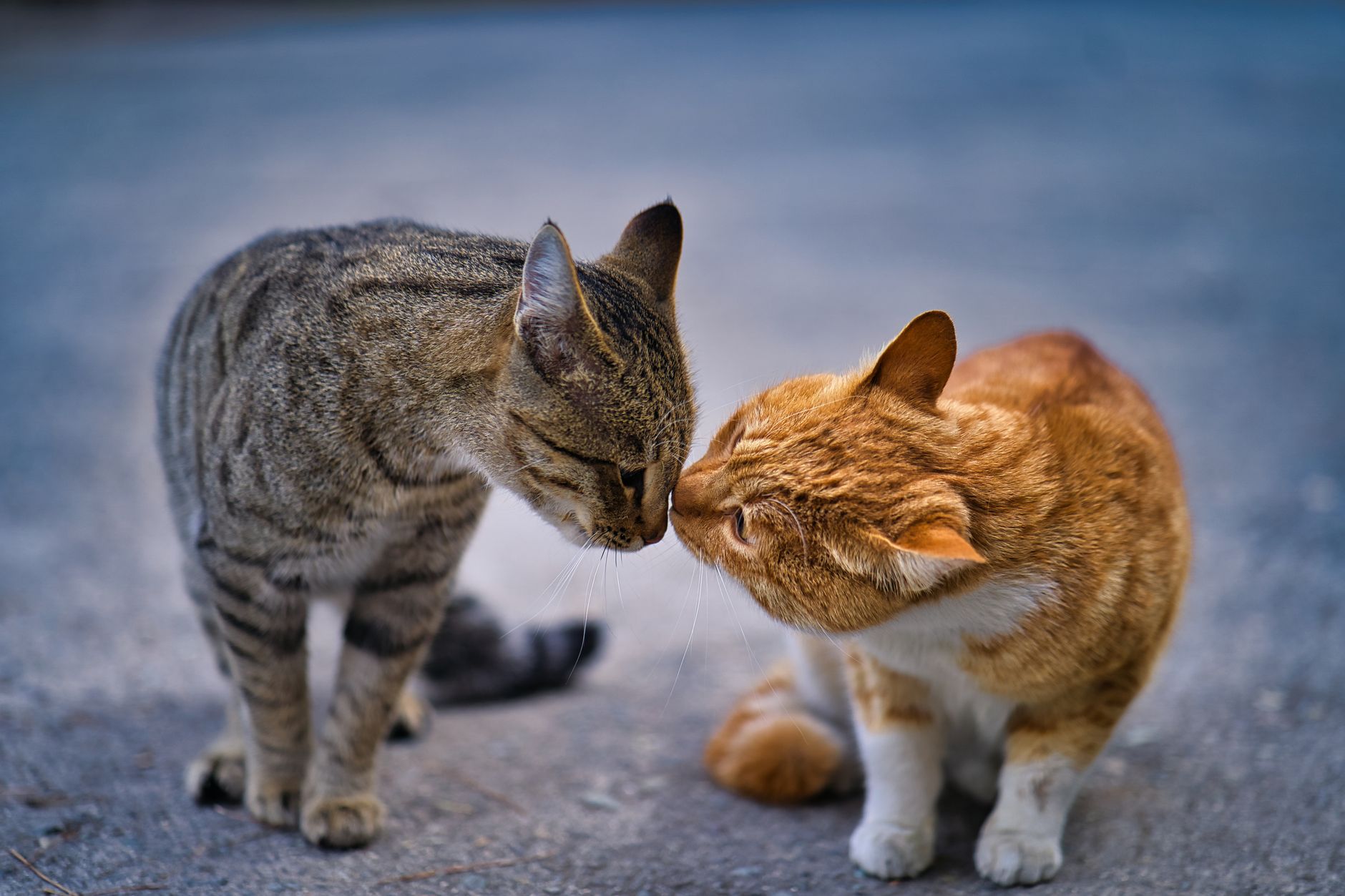
If you’ve ever watched two cats interact, you’ve probably noticed something surprising:
They don’t “talk” the way they talk to us.
From a pawrent’s point of view, cats seem almost silent with each other—yet somehow, everything gets communicated. Boundaries are set. Friendships form. Conflicts end before they begin.
So how does that happen?
The simple answer is this:
Cats communicate with each other primarily through body language, scent, and subtle vocalizations—not through constant meowing.
Understanding this system helps pawrents interpret feline relationships more clearly.
The Quick Pawrent Answer (Up Front)
Cats communicate with each other using:
-
Body language (posture, tail, ears)
-
Facial expressions
-
Scent marking
-
Limited vocal sounds
-
Spatial behavior
Most communication is silent and intentional.
Why Cats Communicate Differently With Cats Than With Humans
Cats evolved to communicate:
-
Subtly
-
Efficiently
-
Without drawing attention
Meowing is mostly reserved for humans.
Between cats, communication relies on signals that:
-
Can be read quickly
-
Don’t attract predators
-
Respect personal space
This makes feline communication quiet—but powerful.
Body Language: The Primary Communication Tool
Body language is the most important way cats talk to each other.
Posture
A cat’s body position reveals intent:
-
Upright and relaxed = calm
-
Low and tense = fear or caution
-
Sideways with arched back = defensive
Cats read posture instantly.
Tail Signals Between Cats
The tail is a major communication tool.
Common tail messages:
-
Tail held upright = friendly greeting
-
Slow swishing = irritation
-
Fast whipping = aggression
-
Tucked tail = fear or submission
Cats rarely misinterpret tail language.
Ear Position and Meaning
Ear movement conveys emotional state:
-
Forward ears = interest or calm
-
Sideways ears = uncertainty
-
Flattened ears = fear or aggression
Ear signals often escalate before physical conflict.
Facial Expressions and Eye Communication
Cats use eyes and facial muscles subtly.
Between cats:
-
Direct staring = challenge
-
Slow blinking = trust or calm
-
Dilated pupils = arousal or fear
Averted gaze is often a peacekeeping gesture.
Vocal Communication Between Cats
Cats are surprisingly quiet with each other.
When they vocalize, it’s usually:
-
Hissing – warning
-
Growling – boundary enforcement
-
Yowling – mating or territorial disputes
These sounds are purposeful, not conversational.
Why Cats Rarely Meow at Each Other
Meowing evolved as:
-
A kitten-to-mother signal
-
Later adapted for human interaction
Adult cats don’t need to meow at each other—they already understand body cues.
Scent Communication: The Invisible Language
Scent is one of the most powerful ways cats communicate.
Cats share information through:
-
Facial rubbing
-
Body rubbing
-
Shared sleeping spaces
-
Scent marking objects
Scent communicates:
-
Identity
-
Familiarity
-
Territory
Cats “read” scent long after the other cat is gone.
Pheromones and Social Bonds
Cats release pheromones from:
-
Cheeks
-
Forehead
-
Chin
-
Paws
When cats rub against the same object, they:
-
Create group scent
-
Reduce tension
-
Signal belonging
This is why bonded cats often share spaces.
Territory and Spatial Communication
Cats respect space.
They communicate boundaries by:
-
Blocking pathways
-
Sitting in doorways
-
Choosing high ground
Who controls space often determines social hierarchy.
How Cats Avoid Conflict Through Communication
Cats prefer avoidance over fighting.
They communicate:
-
Discomfort early
-
Warnings clearly
-
Intent before action
Most fights are avoided through signaling alone.
Play vs Aggression: How Cats Tell the Difference
Play communication includes:
-
Loose movements
-
Role switching
-
Pauses
Aggression includes:
-
Stiff posture
-
No breaks
-
Escalating signals
Cats know the difference—even if pawrents don’t.
Mother Cats and Kitten Communication
Mother cats communicate through:
-
Physical contact
-
Low vocalizations
-
Body positioning
Kittens learn communication by watching and responding—not by instruction.
How Cats Communicate Status and Confidence
Confident cats:
-
Move slowly
-
Take up space
-
Maintain relaxed posture
Nervous cats:
-
Move quickly
-
Avoid eye contact
-
Keep low profiles
Status is shown, not fought for.
Multi-Cat Households: Communication in Action
In multi-cat homes, communication becomes structured.
Cats establish:
-
Time-sharing of spaces
-
Preferred sleeping zones
-
Individual routines
Harmony comes from clear, respected signals.
When Communication Breaks Down
Problems arise when:
-
Cats are forced into shared spaces
-
Resources are limited
-
Stress is high
Miscommunication leads to:
-
Tension
-
Avoidance
-
Aggression
Environment matters.
How Pawrents Can Support Healthy Cat Communication
Pawrents can help by:
-
Providing multiple resources
-
Avoiding forced interactions
-
Allowing escape routes
-
Respecting feline boundaries
Less interference = better communication.
Why Cats Sometimes “Talk Through You”
Cats may:
-
Mark you with scent
-
Sit between you and another cat
You become part of the communication landscape.
What Cats Are Really Saying to Each Other
Most feline communication translates to:
-
“I’m calm.”
-
“Give me space.”
-
“I belong here.”
-
“I trust you.”
It’s subtle—but clear.
Pawrent Perspective: Watching Cat Conversations
Once you learn the signals:
-
Interactions make sense
-
Tension becomes predictable
-
Relationships become visible
Cats are always talking—you’re just learning their language.
Final Pawrent Perspective: How Do Cats Communicate With Each Other?
From a pawrent’s point of view:
-
Cats communicate mostly without sound
-
Body language and scent do the heavy lifting
-
Vocalization is reserved for serious messages
-
Communication prevents conflict more than it causes it
Cats don’t need words—they have a system that works.
And once you understand it, living with multiple cats becomes much more peaceful.