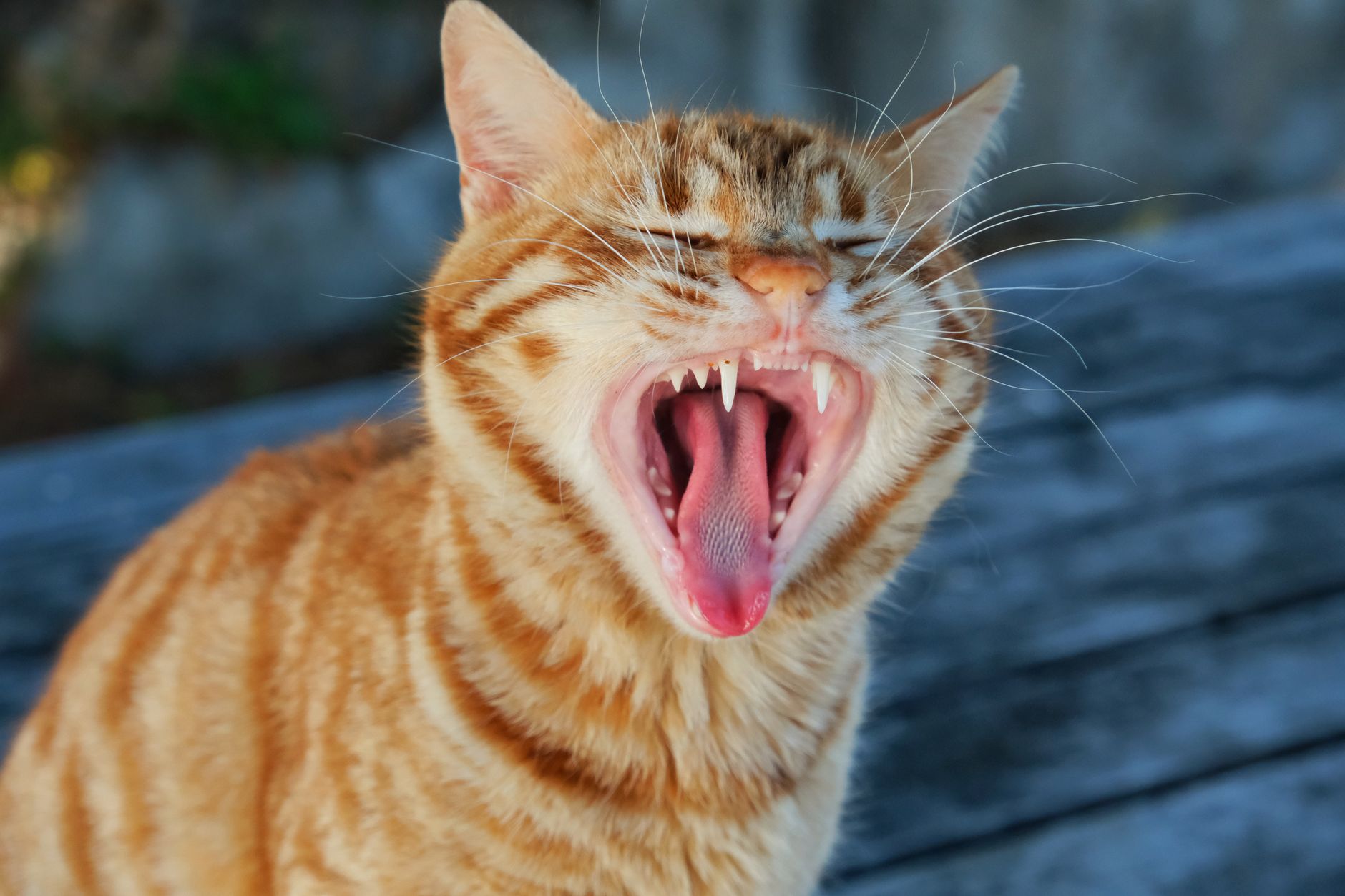
Cats open their mouth when they smell to trigger the flehmen response. This behavior directs scent molecules to the vomeronasal organ, allowing cats to analyze pheromones and chemical signals more accurately.
What Is the Flehmen Response?
The flehmen response is a natural sensory behavior seen in cats and other mammals. It involves opening the mouth slightly and pausing after smelling something interesting.
This action redirects scent particles away from the nose and toward a specialized organ used for chemical communication.
How a Cat’s Sense of Smell Works
Cats rely on two scent-processing systems. The primary olfactory system handles everyday smells, while the secondary system interprets pheromones and complex chemical cues.
Mouth opening enhances airflow patterns that support deeper scent analysis.
The Vomeronasal Organ Explained
The vomeronasal organ, also known as Jacobson’s organ, sits on the roof of the mouth just behind the front teeth.
When a cat opens its mouth, scent molecules travel through small ducts to this organ, enabling detailed chemical interpretation.
Why Cats Open Their Mouth After Smelling
1. Detecting Pheromones
Pheromones are chemical messages exchanged between animals of the same species. Cats use the flehmen response to detect pheromones related to territory, social status, and reproduction.
2. Analyzing Unfamiliar or Strong Scents
New or intense odors trigger deeper investigation. Opening the mouth allows cats to collect additional chemical information about the source.
3. Identifying Other Animals
Cats commonly open their mouth after smelling urine, feces, or scent marks. This helps determine another animal’s identity, sex, and reproductive status.
4. Processing Reproductive Signals
Male cats frequently display the flehmen response when exposed to scents from females in heat. The behavior supports reproductive decision-making.
Why the Expression Looks Strange to Humans
The relaxed jaw, curled lip, and frozen posture can appear humorous or concerning.
This expression does not indicate pain or aggression. It reflects a moment of focused sensory processing.
Is This Behavior Normal?
Yes. The flehmen response is completely normal and indicates healthy sensory function.
Episodes are brief and occur only when scent analysis is needed.
When Mouth Opening Could Indicate a Problem
Although usually harmless, frequent mouth opening paired with other symptoms may signal illness.
Seek veterinary care if you notice drooling, pawing at the mouth, bad breath, appetite loss, or visible discomfort.
Can or Should This Behavior Be Prevented?
No intervention is required. The flehmen response is instinctive and beneficial.
It should never be discouraged unless accompanied by signs of medical distress.
Indoor vs Outdoor Cats
Outdoor cats display this behavior more frequently due to exposure to other animals.
Indoor cats still perform the flehmen response when encountering new people, objects, or unfamiliar smells.
Long-Term Behavioral Outlook
Cats that open their mouth when smelling are behaving normally.
No training, correction, or treatment is needed in healthy cats.
Veterinary Disclaimer and Next Steps
This content is educational and does not replace professional veterinary advice.
If mouth opening occurs without exposure to smells or is accompanied by pain-related signs, schedule a veterinary exam.