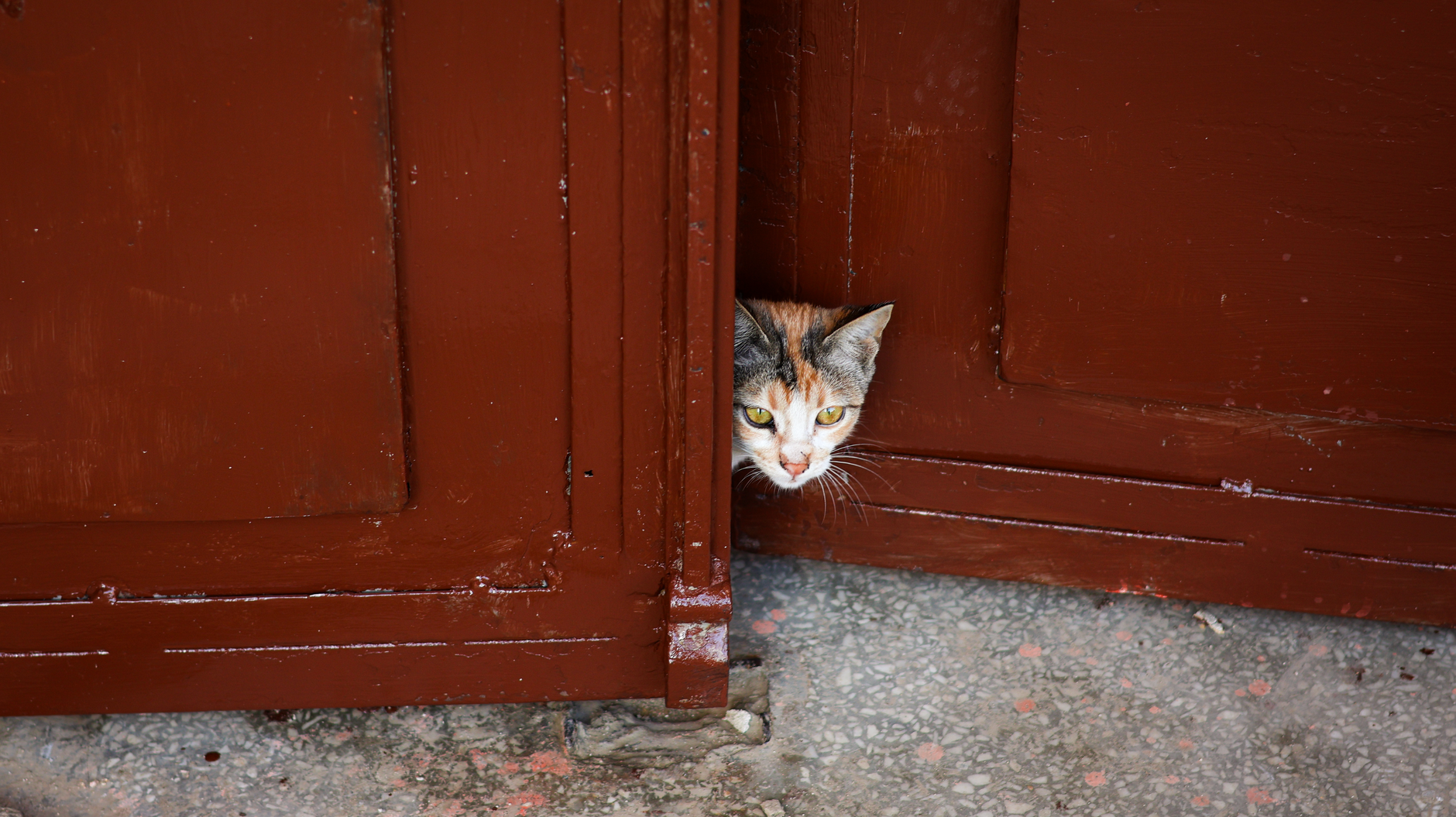
A cat repeatedly knocking on a door can be amusing at first, but constant scratching, pawing, or hitting the door can become frustrating. This behavior is usually not random. Cats often knock on doors because they want access, attention, stimulation, food, or a response from their owners.
The most effective way to stop a cat from knocking on a door is to understand what is motivating the behavior and replace it with a more appropriate habit. Punishment rarely solves the problem because it does not address the reason behind the action.
Why Cats Knock on Doors
Cats communicate through actions as much as sounds. When a cat paws at a closed door, they may be trying to influence what happens next.
| Possible Reason | What Your Cat May Be Trying to Communicate |
|---|---|
| Wanting access | The cat wants to enter a room, reach a person, or investigate what is behind the door. |
| Seeking attention | The cat has learned that knocking gets a reaction from people. |
| Boredom | The cat may need more play, activity, or mental stimulation. |
| Routine behavior | The cat expects something to happen at a certain time of day. |
| Curiosity | The closed door represents something unknown that the cat wants to explore. |
The Biggest Mistake: Rewarding the Knocking
Many cats continue knocking on doors because the behavior works. If a cat scratches the door and the owner opens it, talks to them, or reacts emotionally, the cat learns that knocking produces a result.
Even negative attention can reinforce the habit. From a cat’s perspective, a response is still a response.
To change the behavior, the reward pattern needs to change.
Stop Reinforcing the Door-Knocking Habit
The first step is teaching your cat that knocking no longer achieves the desired outcome.
- Avoid immediately opening the door when the cat knocks.
- Do not provide attention during the unwanted behavior.
- Wait for calm behavior before giving attention or access.
- Be consistent so the cat does not receive mixed signals.
This process can take time because some cats may initially increase their efforts when a behavior stops working. This is a common learning pattern known as an extinction burst.
Provide an Alternative Behavior
Stopping a behavior is easier when a cat has something else to do. Instead of only preventing door knocking, teach your cat what behavior earns a positive response.
Examples include:
- Sitting quietly near the door.
- Using a scratching post instead of the door surface.
- Going to a specific bed or resting area when asked.
- Playing with appropriate toys.
Rewarding the replacement behavior helps your cat understand what actions are more successful.
Increase Play and Mental Stimulation
Some cats knock on doors because they have excess energy. Indoor cats especially may need more opportunities to hunt, explore, and solve problems.
Ways to Reduce Boredom
- Use interactive toys that encourage chasing and problem-solving.
- Create climbing opportunities with cat trees or shelves.
- Rotate toys to keep them interesting.
- Schedule regular play sessions.
A cat that has appropriate outlets for energy is less likely to create its own entertainment through door-related behavior.
Make the Door Less Interesting
If a door has become a source of excitement, reducing its appeal can help break the habit.
Possible strategies include:
- Blocking access to the door during certain times.
- Placing furniture or barriers near the area when appropriate.
- Removing visual triggers that make the cat curious.
- Using protective coverings if scratching is causing damage.
The goal is not to frighten the cat but to remove the reward associated with interacting with the door.
Consider the Timing of the Behavior
Many cats develop door-knocking routines around predictable events. For example, a cat may scratch a bedroom door every morning because it has learned that the door eventually opens and breakfast follows.
Understanding the timing can reveal the motivation.
| When It Happens | Possible Cause |
|---|---|
| Early morning | Food expectations or desire for attention. |
| Nighttime | Extra energy, loneliness, or normal feline activity patterns. |
| When someone enters a room | Curiosity or desire to join the activity. |
| When left alone | Possible boredom or separation-related stress. |
Avoid Punishing Your Cat for Knocking
Yelling, spraying water, or physically stopping a cat may create fear without teaching the desired behavior. It can also damage trust and increase stress.
A better approach focuses on:
- Rewarding calm behavior.
- Providing enrichment.
- Changing the environment.
- Being consistent with boundaries.
When Door Knocking May Signal a Problem
Occasional door scratching is usually normal, but sudden changes in behavior may deserve attention. If a cat becomes unusually persistent, distressed, vocal, or destructive, there may be an underlying issue.
Possible causes can include:
- Stress caused by environmental changes.
- Changes in routine.
- Medical discomfort.
- Increased anxiety.
If the behavior appears alongside other changes, consulting a veterinarian can help rule out health concerns.
Creating Better Door Habits Takes Consistency
Stopping a cat from knocking on doors is not about making the cat understand that the behavior is wrong. It is about changing the reward system and giving the cat better ways to communicate needs.
With consistent responses, enough stimulation, and appropriate alternatives, most cats can learn that calm behavior works better than scratching or knocking.
The goal is a home where doors can stay peaceful while cats still feel understood and supported.