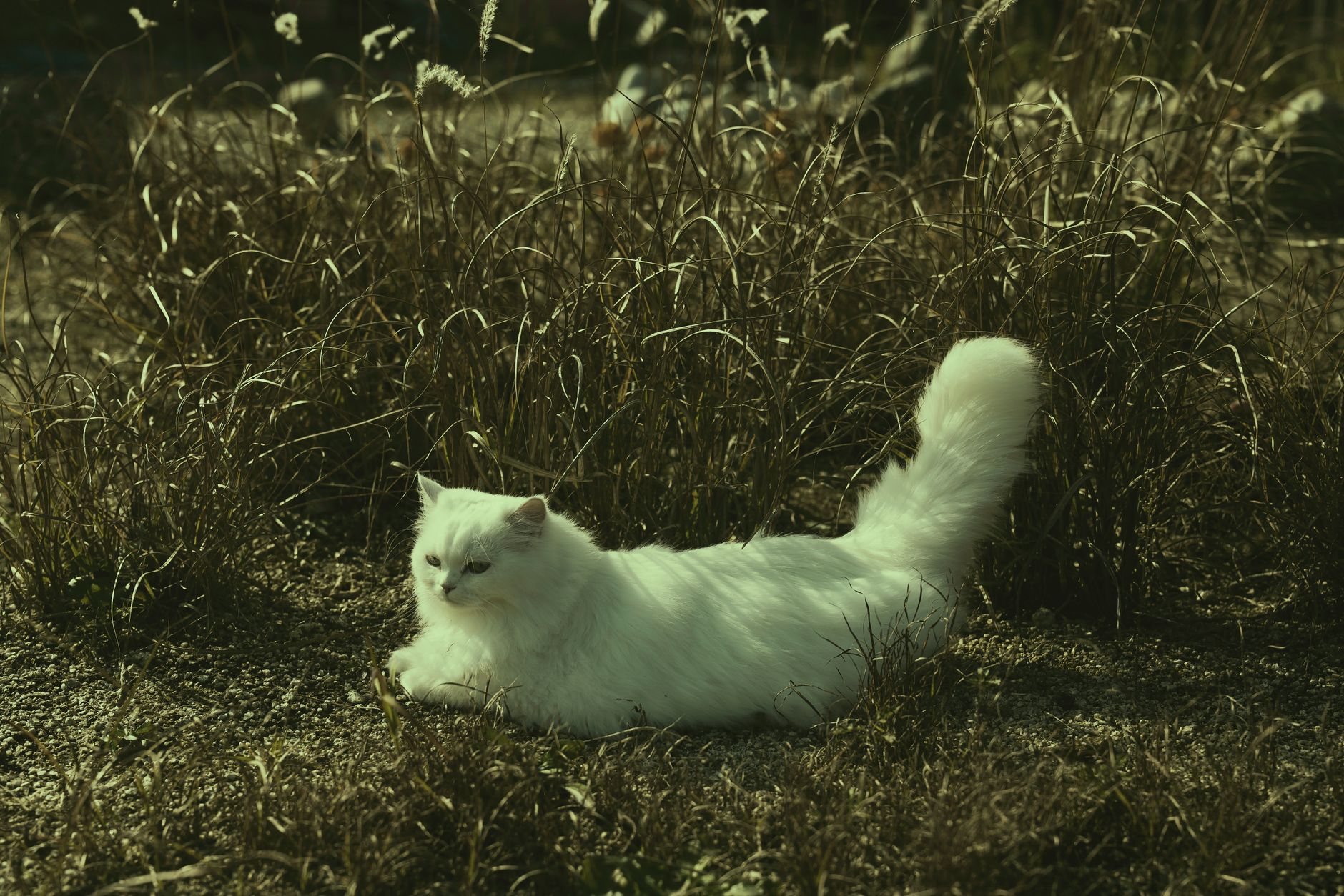
Cats wag their tails while lying down to communicate internal emotional states, process sensory input, regulate arousal, or signal irritation. Unlike dogs, tail movement in cats is rarely a sign of happiness. Instead, it reflects mental activity, emotional conflict, overstimulation, or focused attention. The meaning depends entirely on tail speed, position, amplitude, and surrounding context.
Understanding this behavior requires examining feline neurology, body language systems, emotional regulation, and instinctive response patterns. This article explains every major reason cats wag their tails while resting, how to interpret subtle differences, and when tail movement indicates stress or impending aggression.
Understanding the Cat Tail as a Communication Organ
The cat tail is an extension of the spine, composed of 19–23 vertebrae, dense musculature, and rich nerve supply. It functions as:
-
A balance regulator
-
A sensory feedback system
-
A visual communication tool
Cats rely more heavily on body language than vocalization when communicating with other animals. The tail acts as a high-resolution emotional indicator, capable of expressing subtle changes in mood within seconds.
Why Tail Movement While Lying Down Is Significant
When a cat is lying down, the body is in a resting or semi-resting state. Any movement during rest becomes more meaningful because:
-
The cat is not engaged in locomotion
-
Muscles are otherwise relaxed
-
The nervous system is internally focused
Tail movement during rest signals active mental or emotional processing, not random motion.
The Neurological Basis of Tail Wagging in Cats
Tail movement originates in the central nervous system, particularly the:
-
Motor cortex
-
Cerebellum
-
Autonomic nervous system
When a cat processes sensory input—sound, smell, touch—the brain sends signals to tail muscles even if the body remains still.
This is why tail wagging often occurs during:
-
Observation
-
Listening
-
Thinking
-
Emotional evaluation
The tail becomes a physical outlet for cognitive activity.
Focused Attention and Sensory Processing
One of the most common reasons cats wag their tails while lying down is heightened focus.
This occurs when a cat is:
-
Watching birds or insects
-
Listening to distant sounds
-
Tracking movement outside a window
The tail moves slowly or rhythmically because the cat is mentally engaged but physically restrained.
Key characteristics include:
-
Slow side-to-side motion
-
Tip-only movement
-
Still ears pointing forward
This tail wagging reflects predatory attention, not irritation.
Emotional Ambivalence and Internal Conflict
Cats often experience conflicting emotional states simultaneously.
For example, a cat may feel:
-
Relaxed by lying down
-
Irritated by ongoing petting
This internal conflict produces tail wagging as emotional leakage.
The tail expresses what the body posture suppresses.
Signs of emotional ambivalence include:
-
Lying comfortably
-
Tail flicking or swishing
-
Subtle ear rotation
This is a warning phase before escalation.
Overstimulation From Petting While Resting
One of the most misinterpreted causes of tail wagging is petting-induced overstimulation.
Cats have low tolerance thresholds for repetitive tactile stimulation, especially along:
-
Lower back
-
Base of tail
-
Hindquarters
When a cat is lying down and the tail begins to:
-
Thump
-
Lash
-
Increase speed
It signals sensory overload, not enjoyment.
If stimulation continues, the behavior may escalate to:
-
Skin rippling
-
Sudden biting
-
Swatting
The tail provides advance warning.
Irritation and Annoyance Signals
A cat wagging its tail while lying down is often saying:
“Stop what you’re doing.”
Tail movement indicating irritation typically shows:
-
Faster, sharper motion
-
Full tail involvement
-
Audible thumping against surfaces
This is distinct from dog tail wagging. In cats, faster usually means worse, not happier.
Low-Level Stress and Environmental Tension
Cats are highly sensitive to environmental changes.
Tail wagging may occur during rest due to:
-
New animals in the home
-
Loud or repetitive noises
-
Unfamiliar scents
-
Changes in routine
The cat remains lying down because the threat is not immediate, but the tail reflects internal vigilance.
Cognitive Stimulation Without Physical Action
Cats often mentally rehearse actions.
While lying down, a cat may be:
-
Simulating a hunt
-
Processing previous interactions
-
Monitoring territory
The tail moves because the brain is active even when the body is still.
This is similar to humans tapping fingers while thinking.
Predatory Frustration and Inhibited Hunting
When a cat sees prey but cannot access it—such as birds through a window—the tail may wag due to frustrated predatory drive.
This behavior combines:
-
Excitement
-
Frustration
-
Focus
Tail motion helps regulate arousal levels when physical action is blocked.
Emotional Arousal Without Aggression
Not all tail wagging indicates aggression.
Some cats wag their tails during:
-
Play anticipation
-
Excited curiosity
-
Mild arousal
These movements are usually:
-
Fluid
-
Controlled
-
Moderate in speed
Context determines meaning.
Sleep Transitions and Semi-Conscious Movement
Cats often wag their tails during light sleep or drowsy states.
This occurs because:
-
Motor inhibition is incomplete
-
Dream imagery activates muscles
This form of movement is involuntary and usually stops once the cat fully wakes or sleeps.
Breed and Personality Influences
Some cats wag their tails more frequently due to:
-
High reactivity
-
Strong prey drive
-
Expressive temperament
Breeds known for expressive tails include:
-
Siamese
-
Oriental Shorthair
-
Bengal
Personality traits influence frequency, not meaning.
Tail Position and What It Changes About Meaning
Tail movement must be interpreted alongside tail position:
-
Low tail + wagging → irritation or caution
-
Neutral tail + slow wag → focus or thinking
-
Raised tail + twitching tip → excitement or anticipation
Position modifies interpretation significantly.
Speed, Amplitude, and Rhythm Differences
Three variables determine meaning:
-
Speed – faster equals higher arousal
-
Amplitude – full swings indicate stronger emotion
-
Rhythm – erratic motion suggests agitation
Slow, controlled motion reflects thought.
Fast, forceful motion reflects emotional escalation.
Comparing Cat Tail Wagging to Dog Tail Wagging
Dogs wag tails to communicate social intent.
Cats wag tails to express internal states.
This difference explains why cat tail wagging is often misread by humans accustomed to dogs.
When Tail Wagging Signals Impending Aggression
Tail wagging becomes a warning when paired with:
-
Flattened ears
-
Dilated pupils
-
Tense muscles
At this stage, the cat is preparing to defend boundaries.
Ignoring these signals often leads to sudden aggression.
Chronic Tail Wagging and Anxiety Disorders
Persistent tail wagging at rest may indicate:
-
Chronic stress
-
Environmental insecurity
-
Lack of enrichment
This is more common in indoor cats without adequate stimulation.
Pain and Discomfort as Underlying Causes
Cats in pain may wag their tails due to:
-
Muscle tension
-
Neurological discomfort
-
Abdominal pain
Pain-related tail movement is often:
-
Subtle
-
Repetitive
-
Paired with reduced activity
Medical evaluation is warranted if behavior is new or persistent.
Neurological Conditions Affecting Tail Movement
Rarely, tail wagging may stem from:
-
Nerve irritation
-
Spinal issues
-
Seizure activity
These cases involve involuntary movement and require veterinary assessment.
The Role of Learning and Human Reinforcement
Cats may learn that tail movement:
-
Gains attention
-
Stops petting
-
Changes human behavior
This reinforces tail signaling as an effective communication tool.
How to Respond When Your Cat Wags Her Tail While Lying Down
The correct response depends on context:
-
Stop petting if movement intensifies
-
Observe ears, eyes, and posture
-
Give space if signs escalate
Respecting tail signals prevents bites and scratches.
Environmental Enrichment to Reduce Negative Tail Signals
Improving environmental stimulation reduces stress-based tail wagging.
Effective enrichment includes:
-
Interactive play
-
Window perches
-
Puzzle feeders
-
Predictable routines
Mental satisfaction reduces emotional overflow.
Why Ignoring Tail Signals Leads to Behavioral Problems
Ignoring early warning signals teaches cats that subtle communication fails, forcing escalation.
This increases the likelihood of:
-
Aggression
-
Fear responses
-
Defensive behavior
Tail wagging is a polite warning, not misbehavior.
Tail Language as Part of the Full Body Language System
Tail movement should always be interpreted alongside:
-
Ear position
-
Eye dilation
-
Muscle tension
-
Vocalization
Isolated interpretation leads to misunderstanding.
Final Perspective on Tail Wagging While Lying Down
When cats wag their tails while lying down, they are communicating internal processes, not performing random movements. The tail acts as a window into the feline nervous system, revealing focus, irritation, conflict, or arousal long before overt behavior appears.
Understanding this behavior allows owners to:
-
Prevent aggression
-
Improve trust
-
Respect boundaries
-
Strengthen communication
The tail speaks—quietly but clearly.